Branding 101: From Concept to Launch
A brand isn't a logo. It's the entire experience someone has with your business — from the first impression to the lasting memory. This guide walks you through the complete branding process, from initial strategy through to a successful market launch.
1. What Branding Actually Means
Branding is the deliberate process of shaping how people perceive your business. It encompasses your visual identity, messaging, customer experience, and the emotional associations people form with your name. A strong brand creates recognition, builds trust, and commands premium pricing.
Key Insight
Consistent brand presentation across all platforms increases revenue by up to 23% (Lucidpress, 2025). Branding isn't an expense — it's an investment in pricing power.
2. Brand Strategy: The Invisible Foundation
Before designing a single visual element, you need to define your brand strategy. This includes your purpose (why you exist beyond profit), positioning (how you differentiate from competitors), target audience (who you're serving), and brand values (the principles guiding your decisions).
A brand strategy document should answer: What do we stand for? What promise do we make? How are we different? Who is our ideal customer? What do we want people to feel when they interact with us?
3. Visual Identity Design
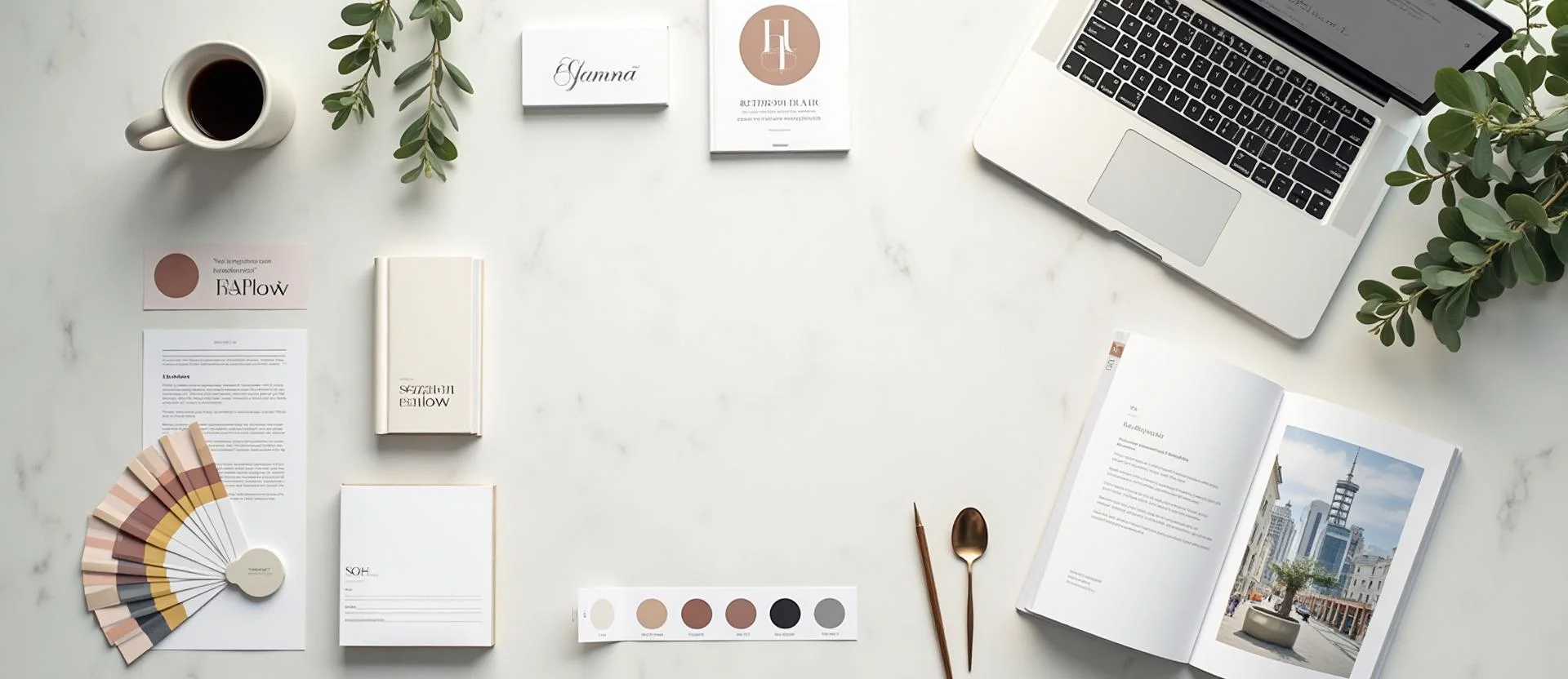
Your visual identity is the tangible expression of your brand strategy. It includes your logo (primary, secondary, icon variations), colour palette (primary, secondary, accent, and neutral colours), typography (display and body font pairings), imagery style, and graphic elements.
A well-designed visual identity is distinctive (stands out from competitors), appropriate (fits your industry and audience), timeless (won't feel dated in three years), and flexible (works across all touchpoints from a favicon to a billboard).
4. Brand Voice and Tone
Brand voice is your consistent personality in words. Are you formal or casual? Technical or approachable? Witty or sincere? Your voice stays consistent; your tone adapts to context. A brand might be "warm and knowledgeable" but shift tone between a celebratory social post and a customer complaint response.
Document 3–5 voice attributes with examples of dos and don'ts. This ensures consistency whether your founder is writing a LinkedIn post or an intern is replying to a customer email.
5. Creating Brand Guidelines
Brand guidelines are the rulebook that ensures consistency. They should cover logo usage (spacing, sizing, colour variations, what not to do), colour specifications (HEX, RGB, CMYK, Pantone), typography rules, photography and imagery direction, voice and tone guidelines, and application examples.
Key Insight
The best brand guidelines are living documents — concise enough to follow, detailed enough to maintain consistency, and updated as the brand evolves.
6. Planning Your Brand Launch
A brand launch is your opportunity to make a strong first impression — or re-introduce yourself to the market. Plan a phased rollout: update all digital touchpoints first (website, social profiles, email signatures), then physical assets (signage, packaging, printed materials), and finally announce publicly through a coordinated campaign.
Don't underestimate the internal launch. Your team needs to understand and embody the brand before customers experience it. Run an internal workshop, distribute guidelines, and make everyone a brand ambassador.
Start Building
Great brands aren't born — they're built with intention. Whether you're starting from scratch or refreshing an existing brand, the process is the same: strategy first, execution second, consistency always. The investment you make in branding today compounds into trust, recognition, and revenue for years to come.