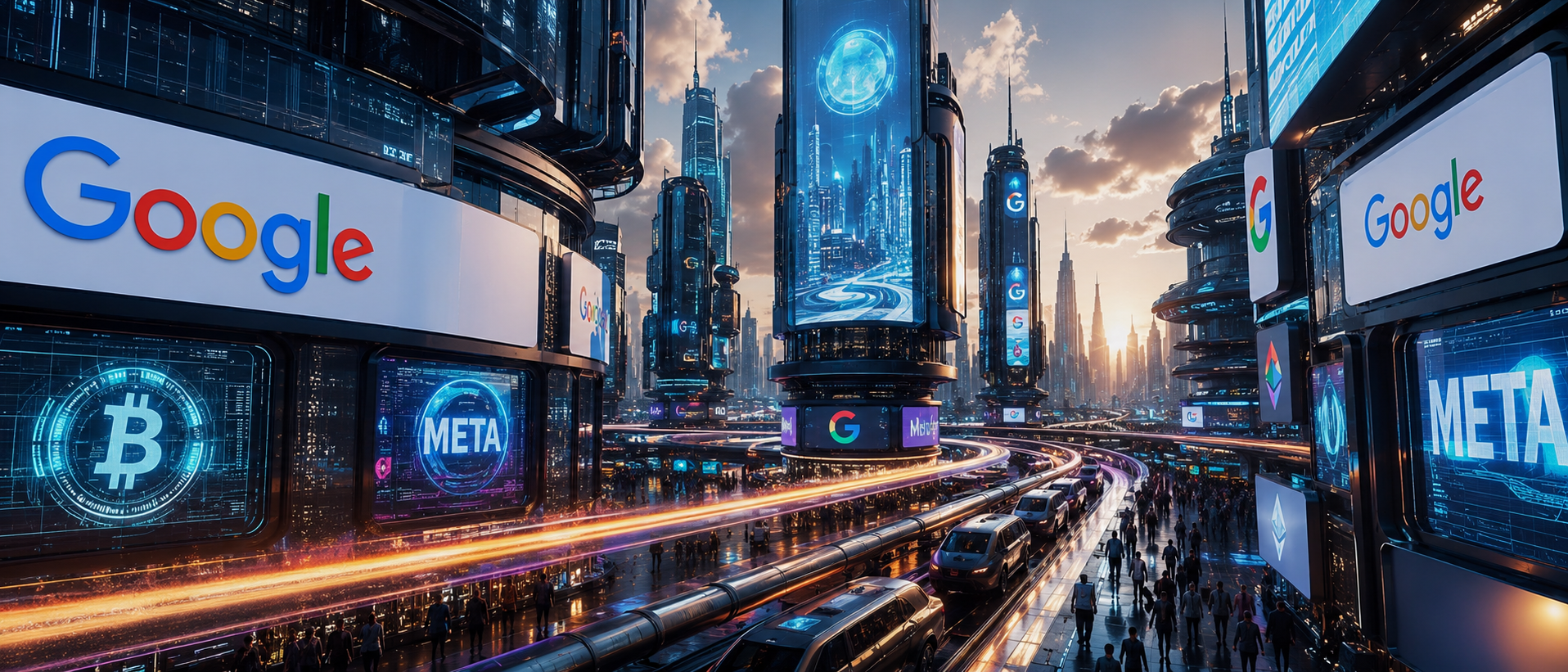
Welcome to Ad City: The $11 Trillion Advertising Metropolis
Picture a city skyline where every tower is funded by attention. That's the global ad economy in 2026 — a metropolis built from impressions, clicks, and conversions, with Google, Meta, Amazon, and TikTok as the landlords and every brand on Earth paying rent.
How Big Is "Big"?
Headline numbers vary by source, but the direction is consistent: digital advertising now accounts for more than 70% of global ad spend, retail media is the fastest-growing segment, and connected TV has overtaken linear in most developed markets. The "ad economy" is no longer the slice of marketing budgets that buys media — it's the dominant business model behind almost every major consumer platform.
The Three Forces Shaping the City
1. Retail media. Woolworths, Big W, Catch, Amazon, FoodWorks, Metcash and every major marketplace are now ad businesses with stores attached. Search ads inside retailer sites convert at rates that traditional digital can't match — because the shopper is already in buying mode.
2. AI-driven optimisation. Bidding, creative testing, audience targeting — almost every operational layer of paid media is now algorithm-led. The human's job is to set strategy, brief creative, and judge taste; the machine handles the execution loop.
3. Privacy and identity. The death of the third-party cookie, ATT on iOS, and tightening privacy regulation have made first-party data the most valuable asset a brand can build. Loyalty programs, logged-in experiences, and direct email lists are quietly the new media plan.
What This Means for Australian Brands
For Australian businesses, the implication is uncomfortable: media is more efficient than ever, and also more crowded than ever. Cost per acquisition keeps creeping up in most categories because everyone has access to the same tools. The brands pulling ahead are the ones doing the unglamorous work — better creative, better landing pages, better email, better retention.
The City Keeps Growing
Ad City isn't shrinking. It's getting taller, denser, and harder to navigate without a guide. The winners aren't necessarily the biggest spenders — they're the brands that understand the system, build their own audiences, and stop renting attention they could own.
Need Help Bringing Your Brand to Life?
Webfx2 Digital is a Sydney and Wollongong creative agency specialising in FMCG packaging, web design, branding, and digital marketing for Australian businesses.