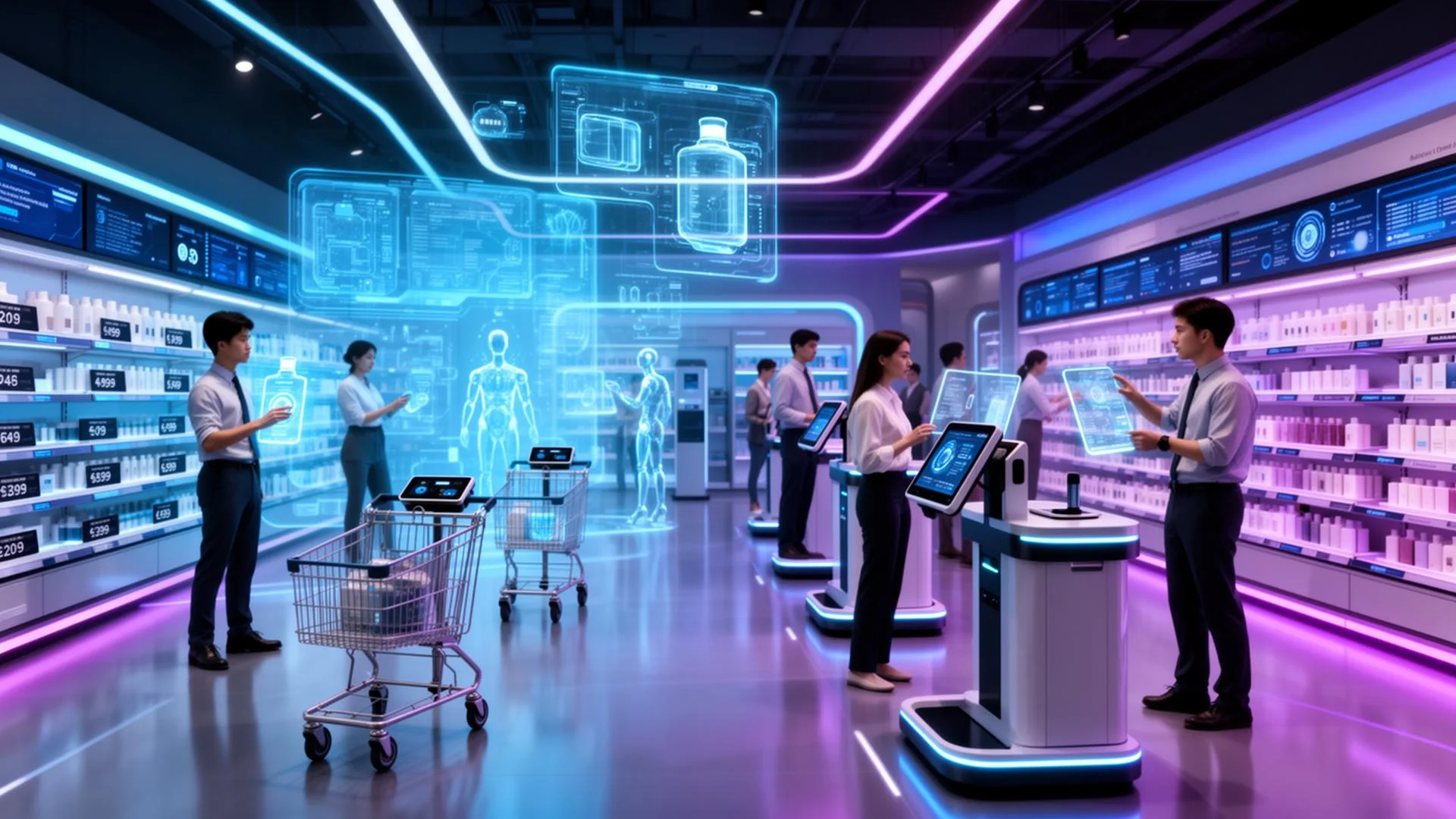
The Agentic Shift: How AI is Revolutionising Retail Technology in 2026
The retail industry is undergoing its most significant technological transformation in decades. We're witnessing the shift from Analytical AI—systems that predict and recommend—to Agentic AI—autonomous systems that act, negotiate, and optimise in real-time. This isn't science fiction. It's happening right now in stores across Australia and the world.
From Walmart's autonomous supply chain agents to smart shopping carts that know your shopping list better than you do, the innovations reshaping retail are as practical as they are revolutionary. Let's dive into the technologies that are redefining how we shop, sell, and think about the retail experience.
The Rise of Agentic AI: From Predictions to Actions
For years, AI in retail meant recommendation engines and demand forecasting. Useful, certainly, but fundamentally passive. The new wave of Agentic AI changes everything. These systems don't just analyse—they execute.
Consider Walmart's "Sparky" system: an AI agent that manages everything from customer support queries to supplier negotiations. By 2026, industry analysts predict that 40% of enterprise retail applications will include task-specific AI agents capable of autonomous decision-making.
Trend Brains: Real-Time Market Intelligence
One of the most exciting developments is what industry insiders call "Trend Brains"—AI systems that spot micro-trends as they emerge. Target's proprietary Trend Brain, for example, can identify emerging fashion movements 18 weeks faster than traditional buying cycles. This allows merchandisers to adjust inventory before a trend peaks, not after.
For Australian retailers, this technology is particularly valuable given our geographic distance from global fashion centres. AI-powered trend detection means local brands can compete on equal footing with international players who previously had first-mover advantages.
Smart Shopping: The Checkout Revolution
Remember when Amazon Go made headlines with its "Just Walk Out" technology? That was merely the opening act. The checkout experience is being reimagined from the ground up, with multiple competing visions of what frictionless shopping actually means.
The Smart Cart Pivot
While fully autonomous "walk out" stores continue to thrive in high-traffic, small-format locations like airports and stadiums, large-format grocers are discovering that shoppers want something different for their weekly shop. Enter the Smart Cart.
Amazon's Dash Cart and similar technologies offer real-time budget tracking, in-store navigation, and automatic checkout—all without requiring the massive camera infrastructure of fully autonomous stores. For a family doing a $300 weekly shop, the ability to see a running total and receive personalised offers is more valuable than saving 90 seconds at checkout.
- •Real-time budgeting — Shoppers see their running total as they add items, reducing checkout shock.
- •In-store navigation — AI guides shoppers to items on their list via the most efficient route.
- •Personalised promotions — Location-aware offers appear as shoppers pass relevant products.
- •Automatic checkout — Simply walk out—your account is charged automatically.
Biometric Payments Go Mainstream
Amazon One's palm-recognition payment system has now surpassed 8 million uses globally. The technology, which lets shoppers pay with a wave of their hand, is expanding beyond Amazon-owned stores into sports venues, convenience stores, and increasingly, traditional retailers.
For Australian retailers, the biometric payment trend presents both opportunity and challenge. While consumers appreciate the convenience, privacy concerns require careful communication and robust security measures.
Hyper-Personalisation: The 4.5 Million Stores Vision
Here's a concept that would have seemed absurd just five years ago: retailers are now building the capability to create millions of unique store experiences—one for every customer. The vision of "4.5 million stores for 4.5 million customers" is becoming reality through AI-driven personalisation at scale.
Dynamic Digital Storefronts
When you visit a major retailer's website today, AI is already customising the layout, product curation, and even lifestyle imagery based on your browsing history, purchase patterns, and real-time intent signals. Two customers visiting the same URL might see entirely different stores.
This goes far beyond "customers who bought X also bought Y." Modern systems analyse hundreds of signals to determine not just what to show you, but how to show it. A time-pressed parent sees quick-buy options and bundle deals. A leisurely browser sees inspiration content and detailed product stories.
Visual Discovery: See It, Live It, Buy It
AI-powered visualisation tools are transforming how consumers shop for considered purchases. Lowe's kitchen reimagining tool lets customers photograph their current kitchen and instantly see it transformed with new cabinetry, appliances, and finishes. This "inspiration to installation" capability is being replicated across furniture, fashion, and even automotive.
For brands, this technology offers a powerful way to help customers overcome purchase hesitation. When you can see exactly how a $20,000 kitchen renovation will look in your actual home, the decision becomes much easier to make.
Supply Chain: The Dynamic Web
The traditional linear supply chain—manufacturer to warehouse to store—is being replaced by something far more sophisticated: a dynamic web of interconnected nodes, orchestrated by AI "command centres" that simulate thousands of scenarios daily.
Algorithmic Supply Webs
Modern supply chain AI doesn't just track shipments—it anticipates problems before they occur. Systems monitor everything from weather patterns to geopolitical tensions to social media sentiment, rerouting shipments on the fly to avoid bottlenecks.
For Australian retailers, this is particularly valuable. Our distance from global manufacturing hubs makes supply chain disruption especially costly. AI-powered resilience isn't a nice-to-have—it's a competitive necessity.
The Store as Fulfillment Hub
Brick-and-mortar stores are being reimagined as fulfillment nodes in a distributed network. AI-driven "inventory visibility" allows retailers to pool stock across their entire physical network, ensuring that "available in store" is as accurate as "available in warehouse."
- •Ship-from-store — Local stores fulfill online orders, reducing delivery times and shipping costs.
- •Real-time inventory — Customers see actual stock levels, not estimates.
- •Micro-fulfillment — Automated picking systems in store backrooms accelerate order processing.
- •Dynamic routing — AI determines the optimal fulfillment location for each order in real-time.
The Australian Opportunity
Australian retailers have traditionally lagged behind US and European counterparts in technology adoption. But the current wave of innovation presents a unique opportunity. Many of the technologies described here are cloud-native and accessible to retailers of all sizes.
The key insight for Australian brands: you don't need to build these systems from scratch. The major technology platforms are democratising access to AI capabilities that were once the exclusive domain of retail giants.
The Human Element: Augmentation, Not Replacement
It's tempting to view these technologies as harbingers of a fully automated retail future. But the smartest retailers are discovering that AI works best when it augments human capabilities rather than replacing them.
Levi Strauss's approach is instructive. Their "agentic frameworks" handle routine tasks—inventory counts, reorder triggers, basic customer queries—freeing human staff to focus on what they do best: building relationships, solving complex problems, and creating memorable in-store experiences.
The retailers who will win the next decade are those who see technology as a tool for empowering their workforce, not eliminating it.
Looking Ahead: What's Next?
The pace of innovation shows no signs of slowing. Several emerging trends bear watching:
- 1.AI Shopping Agents — Consumers will increasingly delegate purchasing decisions to AI assistants that negotiate prices and find the best deals on their behalf.
- 2.Ambient Commerce — Smart home devices will automatically reorder household staples, removing friction from routine purchases entirely.
- 3.Physical AI — Robotics and AI will merge in warehouse and store environments, with autonomous systems handling picking, packing, and even restocking.
- 4.Predictive Commerce — AI will anticipate customer needs before they're articulated, shipping products that customers are likely to want before they even search for them.
The Bottom Line
We're at an inflection point in retail history. The technologies emerging today will define the shopping experience for the next generation. For retailers, the message is clear: adapt or be left behind.
But adaptation doesn't mean adopting every new technology that emerges. It means understanding which innovations align with your brand, your customers, and your operational capabilities. The most successful retailers will be those who approach technology with strategic intent, not reactive fear.
The future of retail isn't just about technology—it's about creating experiences that customers genuinely value. Technology is the enabler. Human insight remains the differentiator.
Ready to Innovate Your Retail Experience?
At Webfx2 Digital, we help retail brands navigate the technology landscape and create digital experiences that drive real business results. From AI-powered personalisation to omnichannel strategy, our team brings both creative vision and technical expertise.
Get in Touch

