Shelf Success: Planograms, Packaging and Promotions in Australian FMCG
Australia's FMCG sector is worth north of $130 billion. Thousands of brands compete for shelf space and online visibility across Woolworths, Big W, Catch, Amazon, FoodWorks and Metcash, as well as independent retailers. The brands that win don't necessarily have the biggest ad budgets — they have the most disciplined approach to three things: planograms, packaging, and promotion.
Planograms: Where You Sit Matters as Much as What You Are
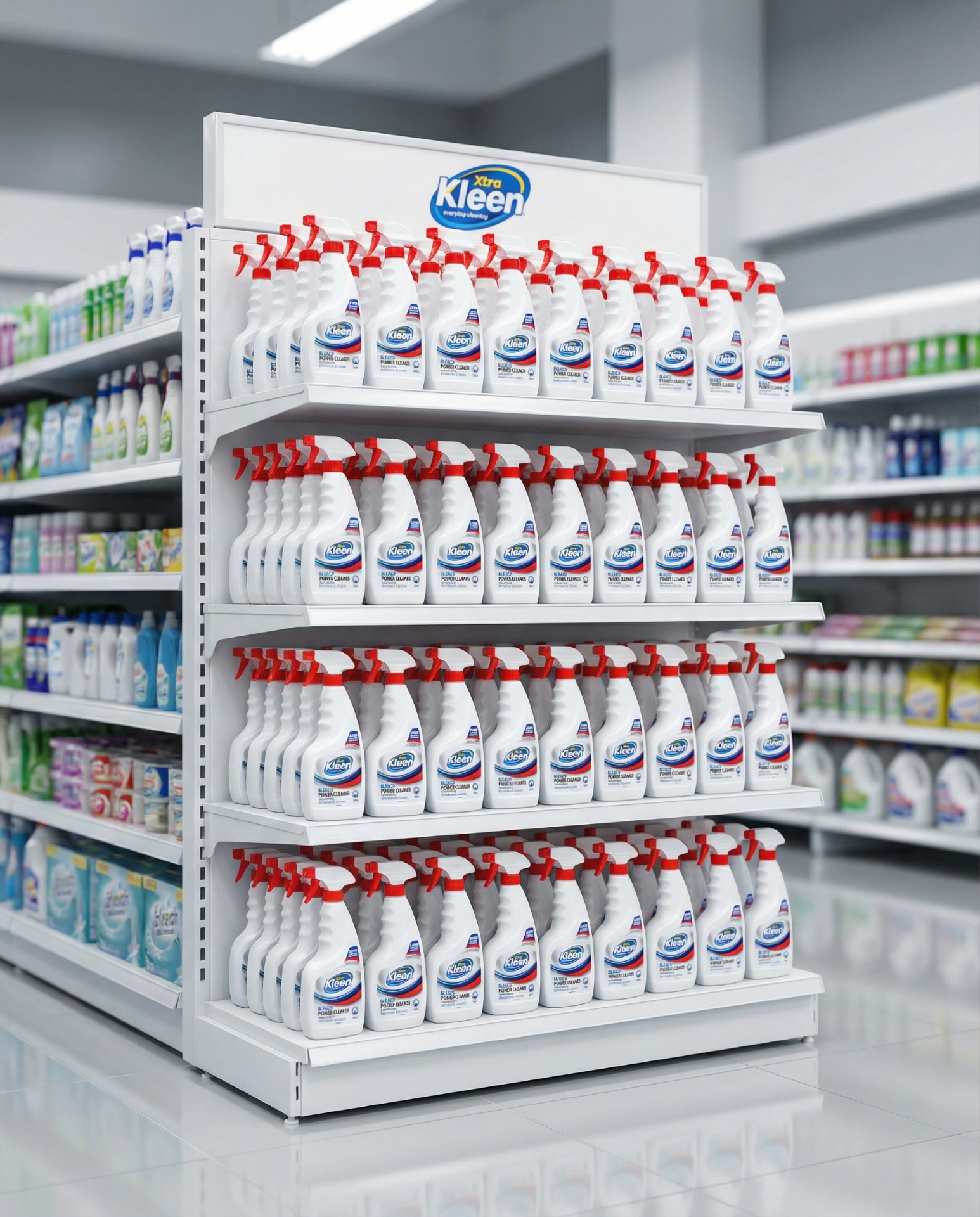
Planograms decide who gets seen. Eye-level positions, end-of-aisle features, and prime-block adjacencies are valuable real estate, and retailer category managers allocate them based on sales velocity, margin contribution, and category role. If your pack performs, it earns better space. If it doesn't, space gets reallocated — quietly and quickly.
Shelf-ready packaging (SRP) is now a category-management baseline. Your secondary packaging must drop straight onto shelf with minimal labour, present the brand block correctly, and survive the supply chain without scuffing. SRP design is a craft of its own — and it's where many brands quietly lose retailer favour.
Packaging: The Three-Second Test
A shopper spends roughly three seconds scanning a shelf. In that window, your pack has to do four things: get noticed, communicate what it is, signal who it's for, and justify the price. Most packs fail at one or more of these.
Colour does most of the heavy lifting. It signals category (blue for cleaning, green for natural, red for value or appetite), variant within a range, and brand recognition from distance. Strong colour systems also create the "billboard effect" — when multiple SKUs of one brand block together and dominate a section visually.
Promotions: The Trap of Constant Discounting
Promotion is the most tactical lever and the most abused. Constant discounting trains shoppers to wait for the sale, erodes margin, and tells category managers that your brand can only move on price. The brands that promote best are surgical — meaningful price drops at the right moments, paired with display, secondary placement, and shopper-marketing support.
Limited editions, range extensions, and seasonal SKUs are often a better lever than straight discounting. They give the retailer a reason to feature, give the shopper a reason to engage, and give the brand a reason to talk — without devaluing the everyday range.
Designing for the Australian Retail Environment
Australian retailers also reward sustainability. The APCO 2025 targets, the ARL labelling program, and mounting consumer expectation around recyclable and lightweight packaging mean sustainability is no longer a marketing differentiator — it's a baseline expectation. Brands designing today should build for it.
The Compounding Effect
Get planogram, packaging, and promotion right and they compound. Better packs earn better space. Better space drives velocity. Velocity earns more space and more promotional support. The opposite is also true — and far more common.
Need Packaging That Wins on Shelf?
Webfx2 Digital designs FMCG packaging for products sold through Woolworths, Big W, Catch, Amazon, FoodWorks and Metcash.